
Modern Cars are Marvels of Engineering, Equipped with Sophisticated Technology
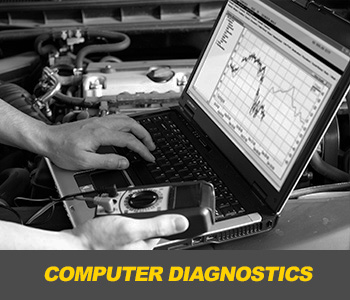
Computer diagnostic tools connect to a vehicle’s onboard computer, which monitors engine performance and other critical systems. These tools decode the codes generated by the vehicle’s computer, indicating a range of problems, from minor sensor errors to major engine issues. They interpret codes from the vehicle’s computer that signal different problems, spanning from small sensor faults to significant engine malfunctions.
5 Signs Your Car Needs a Diagnostic Check-Up
1. Check Engine Light Turns On
Dashboard warning lights serve as your vehicle’s alert mechanism. The “Check Engine” light may illuminate due to causes varying from a loose fuel cap to significant engine problems. Other crucial indicators, such as the ABS or airbag lights, also warn of potential issues. When these lights remain on, it indicates that your car’s computer has detected a fault, and a diagnostic test is required to determine the cause.
2.Decreased Fuel Efficiency
If your vehicle suddenly seems to show a noticeable decrease in fuel economy, there could be a hidden problem. Running diagnostic tests can detect issues with your engine, fuel system, or emissions controls, allowing you to fix the underlying cause and improve your car’s performance.
3. Rough Idling or Shaking
A rough idle in your car may appear to be a small problem, but it clearly shows that your engine is not running as smoothly as it should. Overlooking this issue can decrease both the performance and longevity of your engine.
4. Vehicle Seems Slow to Speed Up
If your car feels sluggish when accelerating or struggles to maintain speed, something may be wrong. A diagnostic test can examine sensors and control modules for issues that impact performance. This could point to problems with your car’s engine, clogged filters, or faulty throttle sensors. In high-performance vehicles, even a slight reduction in acceleration might signal more serious issues.
5. Unusual Engine Noise
Unusual ticking, knocking, or whining noises may indicate engine or exhaust issues. A diagnostic test can pinpoint if it’s a misfire, loose belt, or a more serious problem. Many drivers ignore these sounds, but they signal that something’s wrong. Getting a diagnostic check early helps catch faults before they turn into major repairs.